Blog

  • The Playbook for B2B Marketers: Building Trust at Scale

    The Playbook for B2B Marketers: Building Trust at Scale

    For brands today: Reach is easy. Trust is hard.

    In a B2B landscape flooded with AI-generated content, getting eyeballs on your brand isn’t enough anymore. The biggest hurdle marketers face today isn’t just getting noticed, it’s getting believed.

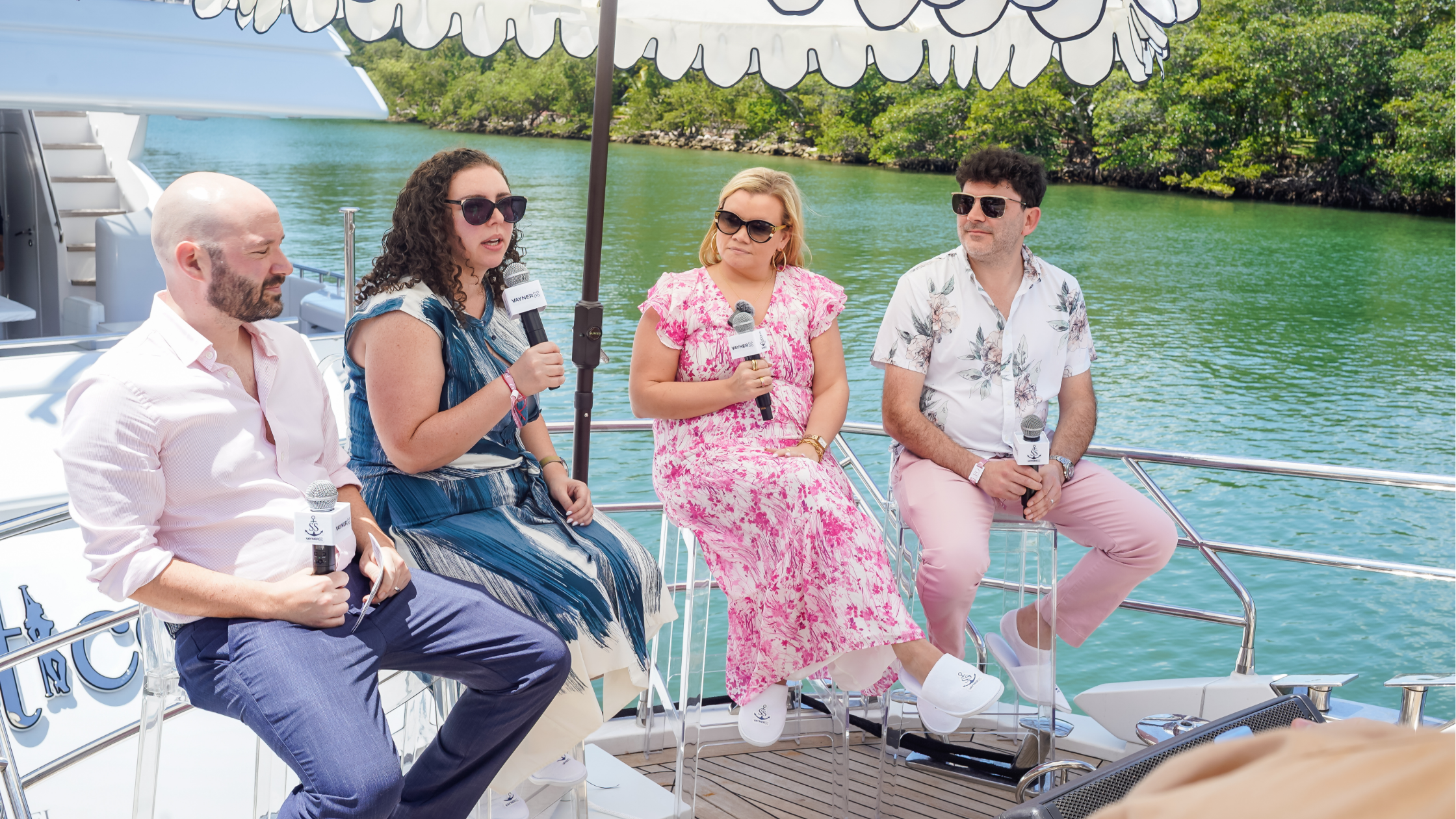
    According to a recent LinkedIn study, 94% of marketers believe that trust is the ultimate key to success. Aboard the SS VaynerX at Miami POSSIBLE week, Pedr Howard, Ryan Barthelmes, Vita Molis, and Kaylen McNamara sat down for a panel that explores this stat, and what it takes to turn passive awareness into real, authentic connection with your audiences.

    If you’re anywhere in the world of B2B marketing, check out the full recap here. 👇

    Bridging The Gap: Awareness vs Actual Belief

    Today’s B2B marketers are tasked with bridging the gap between awareness and actual belief in the brand, and that starts with: 

    • Relevance ➡️ For brands stuck in today’s mid funnel, organic social creative can help brands break through the noise. The algorithms in place make sure that your content is finding the people who it will actually resonate with, making it a huge unlock for consideration and validation. 
    • Confidence ➡️ With various stakeholders at play, it can take up to 9 months for a campaign decision to be made. The best way forward through a lengthy process? Building trust throughout it. It starts with consistency in your messaging, and can combat any of the hesitations that might build along the way. 

    The Three C’s of B2B

    Elevating and evolving your B2B marketing for today starts with the three C’s: credibility, creators, and creativity.

    1. Credibility

    Credibility is rooted in your messaging. A brand has to have a thorough understanding of their own vision and mission, but it doesn’t stop there. If its employees and executives can also weigh in on this opportunity, offering more reach and connection, it helps build what Vita Molis calls the “credibility stack.” From there, it can only grow, reaching customer advocates and peers until you have a network built out. 

    2. Creators

    Creators have completely changed the way we market. In a world where followers matter less and less, and organic content can amass hundreds of thousands of impressions, brands need to prioritize creator-led content. Culture fits are important, and you have to find the right person for your brand, but it’s certainly important for those looking to take things to the next level. 

    3. Creativity

    Creators bring a fresh POV and sense of creativity that can bring in new audiences, and they’re doing it with organic content. The quality needs to be there, but when it is, your messaging can scale across channels and across demographics. 

    The Age of Authenticity

    Today, authenticity is the true cheat sheet, and ultimate shortcut for gaining relevance, connection, and community. Opportunities to connect with your audience, and show them how you’re maintaining brand identity and vision, offers a glimpse into your own authenticity. 

    Something that’s becoming more and more important, is hearing from the people behind the brand. Executives who can offer their insights, and are honest about what they’re seeing and hearing from their industries, are growing online. That inside POV, of someone on the ground at their company, can really break through to an audience. 

    TLDR? Here’s the Closing Thoughts from Our Panelists

    For those wondering what tangible steps they can take next, or what the best way forward is, we closed our panel out with the following question: 

    “What is the most important shift that brands should be making in their creator and content strategies going forward?”

    🤳 Just try it. Take that step, produce content, and let the process take hold, without aiming for perfection. 

    🤑 Dollars follow attention. Brands need to understand the investment behind true production and realize that producing relevance at scale is the most important thing they can do.

    📈 Relevance is key, but so is a measurement framework that understands what is driving the brand. Knowing where engagement comes from is the only way to feed the areas that are having the most success. 

  • What They Won’t Tell You in Orientation: Advice For Getting Promoted & Career Growth

    What They Won’t Tell You in Orientation: Advice For Getting Promoted & Career Growth

    Navigating a career is about so much more than just hitting your numbers. It’s about the connections you build, the mindset you bring to the table every day, and the consistency you maintain.

    We sat down with Katie Sagan (Executive Vice President, People & Experience Team at VaynerMedia) to hear what ACTUALLY makes a difference when starting a new job, and the traits that will take you furthest in your career journey. Let’s get into it. 

    1. What’s your #1 tip for incoming employees to help them get situated?

    Maximize your “New Hire Hall Pass” to build a massive internal network.

    In your first few weeks, your primary job is all about learning along with the people around you. Even with all the tech advancements, connection and relationships are still going to get you further in your career. I always recommend scheduling quick intro meetings with as many people as possible: up, down, and sideways across every department.

    Come prepared to explain your role and how you hope to help, and focus on asking questions about their team and the company’s bigger goals. At the end of every chat, ask: “Who are two other people I should meet to understand this place better, and why?” You have a unique window at the start where you can ask “obvious” questions without judgment. Use it to gain clarity on everything from high-level strategy to the unwritten rules of the office. PEOPLE and connections are everything.

    2. What can someone do in their first 90 days to help them stand out?

    Be an active listener, not the self-appointed problem solver.

    Too often, people come into a new role trying to prove their value by immediately pointing out everything they think is “broken.” The reality is that every process and strategy usually has a history of data, constraints, and emotions tied up in it. Coming in to critique right away puts people on the defensive and makes it harder to build trust.

    Instead, spend those first 90 days listening and asking “why” before you suggest the “how.” When you respect the historical context, you earn the right to recommend improvements later. 

    Parallel to that, do your homework. Read every document, manual, and report you can find. Show up more prepared than anyone else so that when you finally do contribute, your input is grounded in reality, not just first impressions.

    3. What traits or habits are you seeing from those who move up the corporate ladder the fastest?

    The “Power of the Basics”: Reliability, Attitude, and Accountability.

    People often think it’s the “smartest” person in the room, the one with the most degrees, who gets the promotion. In my experience, it’s usually the person who masters the 85% of the job that can’t be taught. So much of any role can be trained, but being an awesome teammate is entirely on you.

    The fast-trackers usually share three non-negotiable habits:

    • Total Reliability: They show up, they hit deadlines, and they don’t let details slip through the cracks. Being the person your manager never has to “check in on” is a massive competitive advantage.
    • A “Teammate First” Attitude: Skills can be trained, but a toxic or indifferent attitude won’t get you far. Those who move up are the ones who make the people around them better and approach challenges with a solutions-oriented mindset.
    • Radical Accountability: They don’t hide from mistakes; they own them, learn from them, and move on. Owning your misses is exactly how you build the trust required for leadership roles.

    4. What’s a piece of career advice you’ve heard (or given) that’s actually made a difference?

    Treat “dress for the job you want” as a metaphor for how you show up.

    When I had my first internship at 17, my dad told me to dress for the job I wanted. At the time, that meant a formal suit. Today, in many offices, the most senior and well-respected folks are likely to be dressed in jeans and a T-shirt (hi Gary!), but the core wisdom remains the same: Don’t wait for permission to lead. If you want to move to the next level, start thinking and contributing like you’re already there. Don’t wait for a formal title to volunteer for a stretch project or to come forward with new ideas. This isn’t about overstepping, it’s about showing up and behaving like the leader you want to become right now. When you start adding that greater value immediately, the organization begins to treat you “as if” you’re already in the role. Eventually, the title and the compensation are just trailing indicators that catch up to the reality you’ve already created.

    5. What’s that thing you won’t see on a resume, but you notice all the greatest leaders have in common?

    Relentless Resourcefulness.

    You can list skills, beating KPIs, and certifications on a resume, but you can’t easily quantify the “Possibility Mindset.” The greatest leaders I’ve ever seen are relentless in their pursuit of a path forward. While others get bogged down listing all the reasons why a project will fail or dwelling on past mistakes, great leaders acknowledge the hurdle and immediately start looking for a way over, under, or around it.

    They understand that the road to a solution is often a “windy path” rather than a straight line. There is something incredibly freeing about realizing you are in control of the next move. Great leaders don’t just find solutions; they create an environment where everyone believes a solution is possible. That mindset is the difference between a manager who maintains the status quo and a leader who changes the game.

    Feeling inspired? Or ready to put some of Katie’s advice to the test? We’re hiring across the globe, looking for our newest team members. Check out open positions here and let’s build what’s next together. 💫

  • The Latest Tech Breakthroughs and Marketing Shifts of 2026: A NewFronts Recap

    The Latest Tech Breakthroughs and Marketing Shifts of 2026: A NewFronts Recap

    Last week, our resident TV and tech expert, Hugh Scallon, headed to IAB New Fronts (aka the world’s largest digital content marketplace) for some boots on the ground journalism on NewFronts 2026 Tech and Marketing Trends. 

    ICYMI the newest innovations in CTV plus the latest TV upfronts, we gathered all the major breakthroughs and updates (thanks Hugh!) into one place. 

    Here’s are the 6 signals you need to know:

    📲 Welcome to the Takeover

    Your favorite platforms are changing, and with that, so are the ways we advertise on social media. TikTok took the NewFront stage to announce its Logo Takeover. This is a new format that allows advertisers to own the first impression across every tab. Essentially, it offers advertisers a way to co-brand with TikTok from the app’s launch screen, so their logo and branding is the first thing viewers see when they open the app. 

    And they’re not the only ones. Snapchat revealed that in 2025, nearly 2 trillion 🤯‼️snaps had been created. That’s roughly about 63,000 snaps per second. With that staggering stat, they led into their latest announcement: Total Snap Takeover. This new format guarantees advertisers the first ad slot across each tab–from the camera and chat to the map and feed…simultaneously. In this new age, advertisers hold all the power, and they’ll be reaching new levels of scale. 

    🤖 AI Isn’t Just A Feature Anymore. It’s The Whole Thing.

    Major names like Meta and YouTube aren’t just using AI to help generate content anymore. Instead, AI is fully orchestrating it. For example, we’re seeing AI that automatically adapts a single creator asset and transforms it into dozens of different layouts, native to Reels, Shorts, and Stories. Marketers no longer need to spend time reformatting their content for it to work. Instead, AI is doing the heavy lifting, and at the same time, giving brands time back to focus on strategy rather than production.

    ⚡️ Relevancy Is What’s In

    Two words to know going forward: cultural adjacency. Another major theme we saw from NewFronts 2026 was the idea that platforms are moving away from broad demographic targeting. Instead, we can expect to see brands targeting highly relevant yet specific channels, through products like TikTok Pulse Mentions and Meta’s Reels Trending Ads. As different topics and trends gain traction online, these updates can conveniently place ads exactly where users are already discussing them in real-time. Keeping your finger on the pulse, and inserting your brand into the most relevant online convos, has never been easier. 

    💡 AI Is Leveling Up (Again)  

    During the same week, we also received an early Upfronts recap with the latest news in CTV, starting with a deep dive into Google and Samsung’s latest generative AI advancements. What was once seen as a “future promise” is now embedded across ad stacks, driving performance, planning, and measurement at scale. GenAI has become part of the very infrastructure behind Google’s Gemini 3.0, as well as Samsung’s new intelligence layer. 

    What that means: From media planning to creative optimization, everything will be automated. Plus, it will be more cohesive than ever before. GenAI will be used to connect fragmented media, data, and workflows into one AI-powered system, ideal for quick and efficient ROI. 

    🛒 The Couch To Cart Pipeline

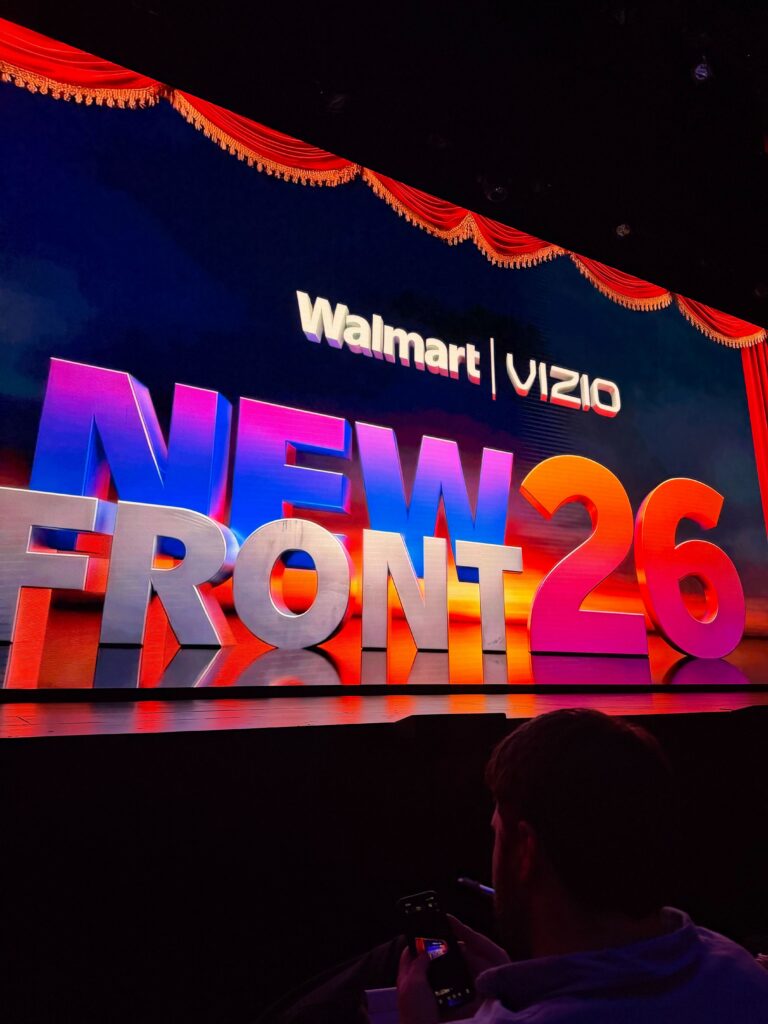
    TV isn’t just TV anymore. The evolution of television, that today’s brands are leaning into, have less to do with what’s on TV but rather what you do with it. With collaborations between Walmart/Vizio and Samsung/Amazon, TV is transforming into an interactive, live shopping storefront. With Walmart and Vizio’s Smart TV partnership, viewers can seamlessly maneuver between discovery straight into purchasing. Similarly, Samsung has teamed up with Amazon, enabling Amazon Ads DSP to launch the era of “performance TV,” extending shoppable reach to up to 90% of households. Big screen reach + commerce data = the retail renaissance is here. 

    📺 Fandom Is Redefining How We Watch

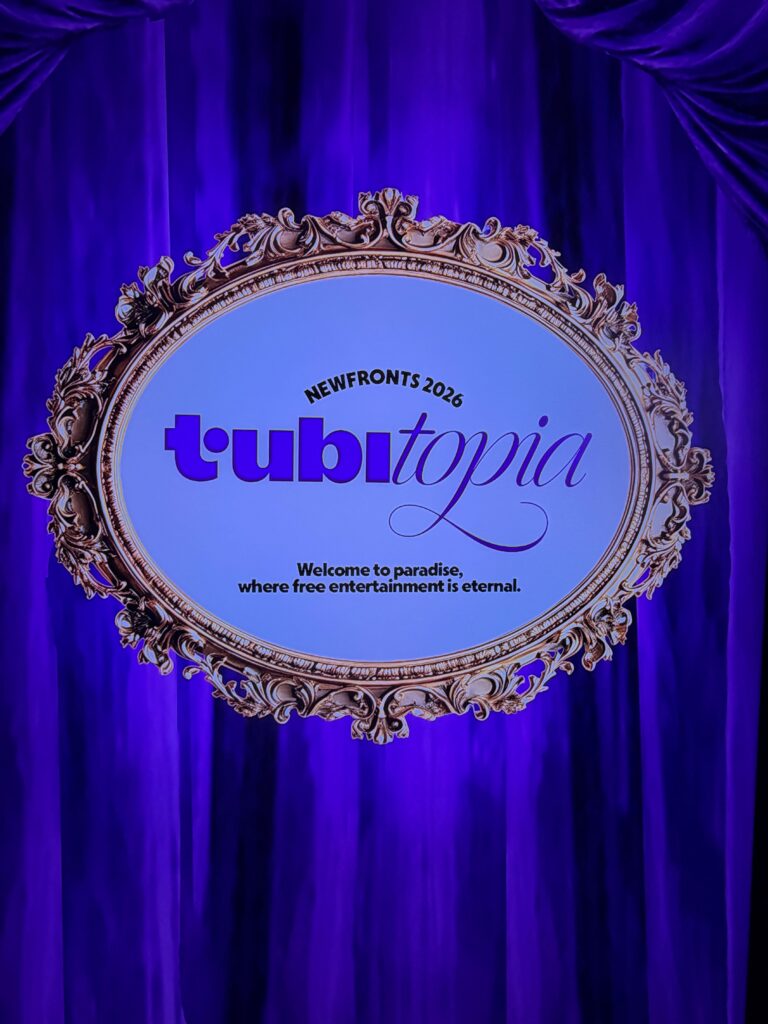
    Fandom is everywhere and your TV providers know that. Tubi announced the launch of ‘Tubitopia,’ a space built for Gen Z, by Gen Z. Bringing in some of your favorite influencers and other viral talent, Tubi’s creatorverse will focus on culturally relevant content designed for younger audiences, while ushering in video-on-demand (as opposed to live viewing.) 

    #CLIENT

    👇 The TLDR

    The evolution of social media, and the insight all marketers need to prepare for going forward, is that socials are now dependent on real-time participation. The NewFronts 2026 Tech and Marketing Trends revealed that more than ever before. The brands that are finding success aren’t the ones just promoting their products, but rather, the ones that treat their social channels as live, automated storefronts. From now on, every post is an opportunity to direct consumers from viewing to purchasing. And that’s evolved into the streaming experience too.  

    Ultimately, the marketplace is undergoing a major shift, as AI and shoppable commerce become inseparable elements to the way we consume media. The brands who pay attention now, and focus on the discovery-to-retail experience, are the ones redefining success in 2026.

  • AEO 101: How Social Media Powers AI Discovery for Brands

    AEO 101: How Social Media Powers AI Discovery for Brands

    SEO took brands decades to figure out. Now there’s a new game, and most brands are starting from zero. AEO, Answer Engine Optimization, is how your brand shows up when people ask AI for answers instead of Googling. If you’re not optimizing for it yet, this is where to start.

    I spend every day working with brands at VaynerMedia on this exact problem. Here’s what you need to know about AEO and why social media is at the center of it.

    What is AEO and Why Does It Matter?

    AEO stands for Answer Engine Optimization. It’s the practice of making your brand’s content show up in AI-generated answers, not just traditional search results. As more people use ChatGPT, Gemini, and Perplexity as their default search tool, this is becoming a critical channel.

    If your brand isn’t thinking about AEO yet, you’re already behind. The good news: most of your competitors aren’t doing it either. There’s a real window right now to get ahead by optimizing your content for AI discovery.

    Social’s Role in AEO

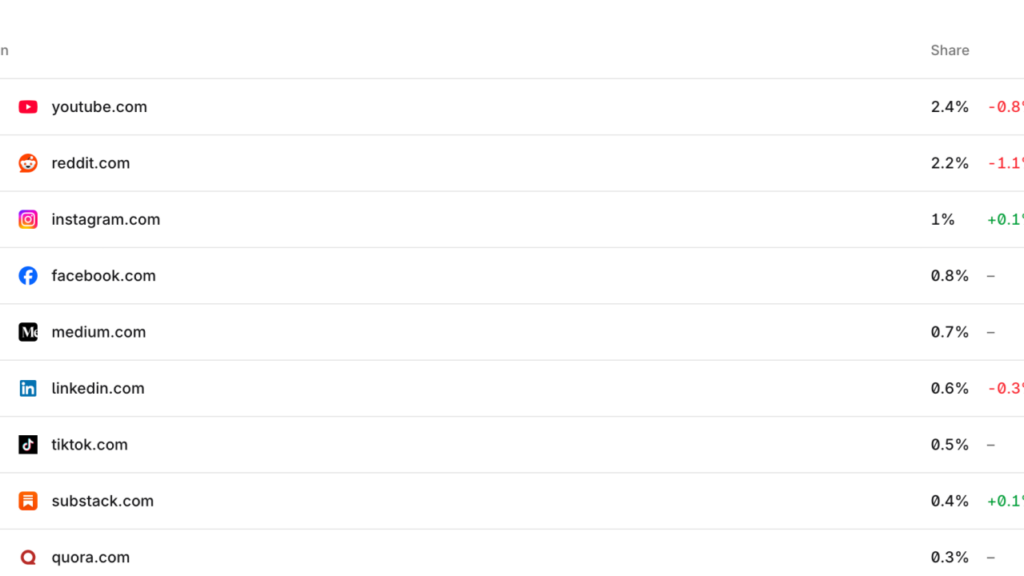
    Here’s what most brands are missing: social media is now a primary input for AI-generated answers. When someone asks ChatGPT or Gemini a question, those models are pulling from social content across the web. YouTube transcripts, Reddit threads, LinkedIn posts. All of it feeds the machine.

    The brands that optimize their social channels for AI discovery now will have a massive head start. We’re seeing this play out in real time at VaynerMedia across paid, owned, and earned. The sooner you move, the bigger the advantage.

    Getting Started With The Social Media Platforms That Matter Most

    The landscape is moving fast. As of March 2026, here are the platforms that matter most for AEO and what we’re seeing work:

    1. YouTube

    • The single most important platform for AEO visibility across AI models
    • AI models like ChatGPT, Gemini, and Perplexity pull heavily from YouTube content
    • Titles, descriptions, transcripts, and comments all give AI models structured text to pull from
    • If you’re only going to optimize one platform for AEO right now, start here

    2. Reddit

    • AI models love Reddit because it’s full of real human opinions and recommendations
    • Brands should be monitoring Reddit conversations in their category and participating authentically
    • The risk: you can’t control the narrative
    • The upside: authentic mentions carry enormous weight with AI models

    3. LinkedIn

    • The sleeper hit. Jumped from #11 to #5 as most cited in ChatGPT responses
    • Matters for both B2B and B2C. If you’re a brand with any kind of thought leadership play, LinkedIn content is getting pulled into AI answers more than ever
    • We’re telling every client to take their LinkedIn content strategy seriously for AEO
    Photo Courtesy of Jon Morgenstern

    Other Platforms to Watch

    Meta (Instagram & Facebook) and TikTok have relatively closed ecosystems today, but that’s changing fast. OpenAI and Google are actively working to index more social content, and these platforms will open up. X is interesting for a different reason. It has massive public data and Grok gives it a unique AI layer. If more users lean into long-form content on X, like this post from our own Jon Morgenstern (EVP, Head of Investment, VaynerMedia), it has real potential. We’re watching it closely.

    Here’s the bottom line: social media is now the foundation of AI discovery. The brands that build AEO into their social strategy today will own the answers tomorrow. The ones that wait will wonder why they stopped showing up.

    If you want to talk about what this looks like for your brand, reach out. This is what we do every day at VaynerMedia. Contact us here.

  • 4 Modern Marketing Shifts Every Brand Needs to Survive 2026

    4 Modern Marketing Shifts Every Brand Needs to Survive 2026

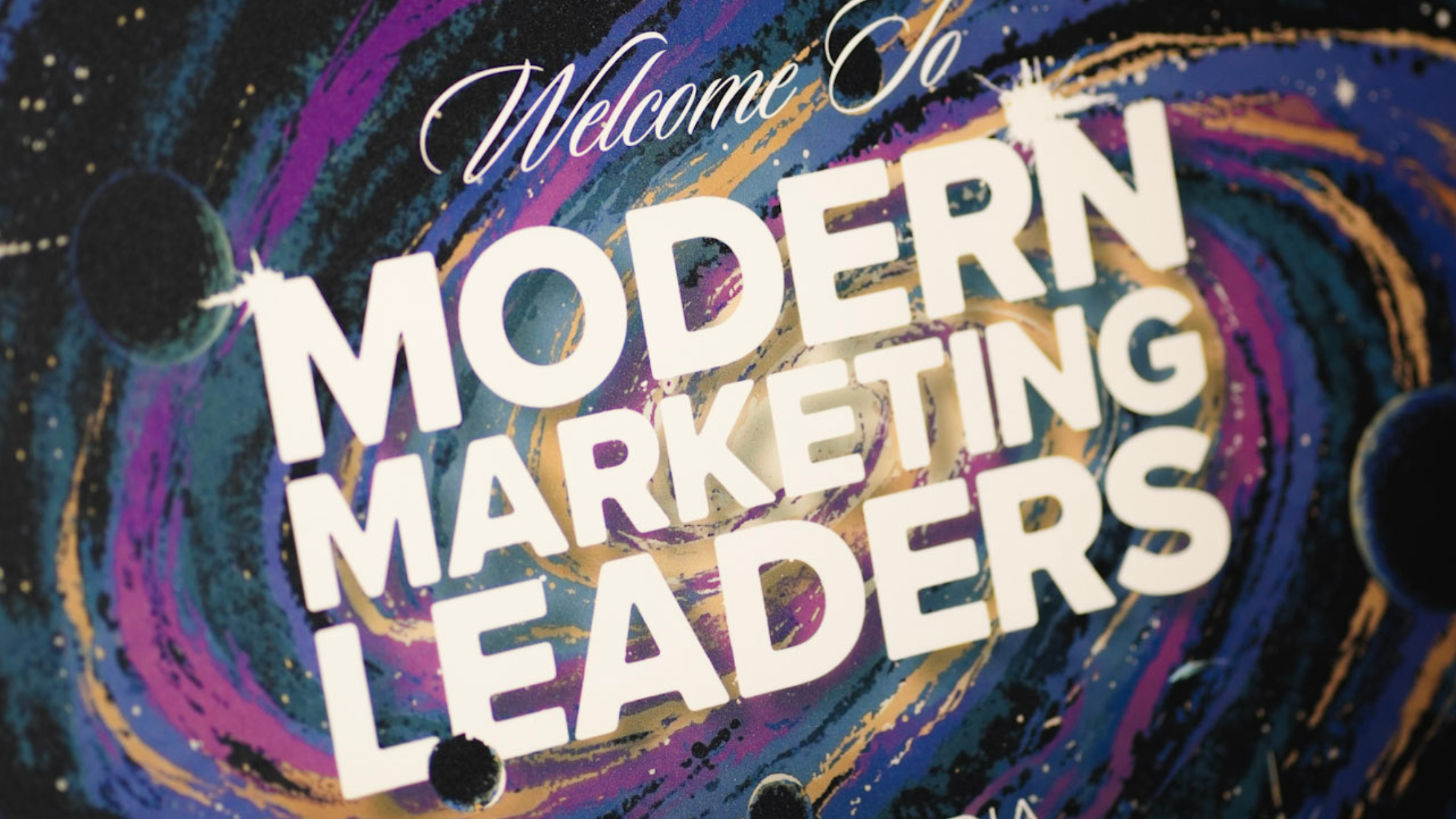
    This week, we hosted our inaugural Modern Marketing Leaders Summit, bringing together a group of top marketing leaders across the UK and EMEA. 

    At the stunning 1 Hotel Mayfair, we spent the day skipping small talk and diving straight into what really matters in 2026 for brand leaders. We kicked things off with a traditional English breakfast (because when in London!) before heading into a packed lineup of panels, as well as a private fireside chat with our CEO, Gary Vaynerchuk.

    To our brand marketing friends who couldn’t make it IRL, here are our 4 biggest takeaways from the Modern Marketing Leaders Summit: 

    1. Modern Marketing Requires Modern Practices

    This Section At A Glance: 

    • The future of our industry is constantly evolving, and with it, so is the role of a marketer. 
    • Organic social is where all of your energy should be placed.
    • Being social-first isn’t just about posting trends. 
    • Make sure to read on about what CasC means. 😉

    In a panel moderated by Alex Semenzato, we heard the first-hand perspective of what challenges our Vayner Partners Darragh McGinley (Head of Social, EMEA, Indeed) , Arjoon Bose (VP Marketing, Coach), and Rebecca Huda (Regional Category Lead Digestive Health – UK & EMEA, Bayer) are facing today. The short answer, though it holds many complexities, is this: The future of our industry is constantly evolving, and with it, so is the role of a marketer. 

    Rather than focus on a major TV spot, brands like Indeed are shifting their focus to be social first. Darragh spoke about the brand’s mission to respond to signals and audience, and how organic social has been a humbling but monumental experience. Simply put, “nothing questions your marketer’s gut more than TikTok.” Though organic social can be a bit unexpected, when a piece of content actually hits, it becomes a cheat code to understanding what works and what audiences want to see from you.

    Being social-first isn’t just about posting trends either. This is a unique opportunity to connect with your consumers. Using Comments as Creative (something we like to call CasC) is a way of joining the latest conversations, and building brand awareness. Just take a look at the success of our friends at ChukMedia, who launched Subway’s latest CasC moment that garnered over 700k+ likes and 1M+ impressions.  

    The Rise of the Creator Economy

    This Section At A Glance:

    • Let creators be creators 
    • The most powerful partnerships in 2026 = creators 🤝 marketers

    Let’s face it: creators have completely taken over. They’re on the biggest stages in the world, with the biggest platforms and biggest audiences. That’s why the relationship between creators and marketers has become increasingly important as we dive into 2026. 

    Joined by viral chef and creator Jordan Billham aka The Notty Chef, our very own Esme Rice spoke with him about his experience as a content creator. For marketers, one of the most important takeaways from Jordan was hearing the creator perspective on brand partnerships. 

    Brands working with creators shouldn’t expect to give their creators a strict set of guidelines. Rather, Jordan explained that content creators are pros of their own craft, and the best content comes from creative freedom. When brands choose to be understanding of a creator’s knowledge, and truly work together, the project moves forward as its own collaborative entity. It’s a goal that creators and marketers work towards together, fusing viral experience with brand expertise.  

    3. AEO & GEO Are Your Next Priority

    This Section At A Glance:

    • Stop relying on brand loyalty 
    • How FAQs help AEO and GEO 
    • Why you need to care about AEO and GEO  

    You don’t need us to tell you how prevalent AI has become. No matter what field you’re in, AI is affecting everybody and everything. In marketing, one of the major shifts we’ve seen take shape is through customer experience. People aren’t shopping like they used to, and because of this, we’re changing the way we market products. VaynerMedia VP, Aengus Boyle dove into it all, and how the answer starts through Answer Engine Optimization and Generative Engine Optimization. 

    Today’s consumers aren’t prioritizing brand loyalty when it comes to online shopping. Instead, they ask AI for the best recommendations for whatever it is they’re looking for. That means that the best way to make sure your product is on the top of ChatGPT’s “Best Christmas Gifts” list is through optimization. First, start off by making your brand website easily navigable for AI search engines. Incorporating SEO keywords, as well as heavy text based content like blog posts is one way to make sure LLMs are picking up on your messaging. 

    Another good idea is to adopt question and answer templates, like FAQs that will help engines learn more about your products. One final major takeaway, is that as always, it comes back to social (no surprise there.) Brands that have their owned social channels are more likely to build visibility, especially on YouTube. If you incorporate as many touchpoints and perspectives as you can, it will only be better for your brand. 

    4. Stop Focusing on Brand Strategy (Focus on Relevance)

    This Section At A Glance:

    • Relevance, relevance, relevance! 
    • Read on to hear what gets you impressions, views, likes, attention, profit, and legacy 
    • The role you need on every single creative team 

    Maybe one of the biggest shifts we discussed came from Gary Vaynerchuk during a fireside chat with Jon Evans, that developed into an even bigger conversation during a Gary private session. The big ticket item? Relevance, relevance, relevance! 

    We know that relevance is what gets you impressions, views, and likes. It’s also what translates into attention, profit, and legacy. But how are you actually trying to be relevant, and what steps are you taking to get there? To really get ahead, brands need to start being reactive and focus on relevance strategy. Start by ditching the detailed day-by-day content calendar. With trends that start and end in a day, and viral moments that break the internet, things change too quickly to always plan ahead. Instead, have relevance strategists on deck, who can capitalize on big moments and ensure your content is as effective and viral as possible. 

    A huge shoutout to our incredible team who made this summit one of our best ones yet. As always, we couldn’t be happier to get together with some of the most brilliant minds in the biz, and talk about everything we can do to be bigger and better. 


  • 4 Lessons on Brand Relevance from Super Sunday 2026

    4 Lessons on Brand Relevance from Super Sunday 2026

    Another year, another Big Game behind us. This time, we saw Seattle take home the trophy, heard a fresh batch of shat jokes (iykyk), and also saw the POV from an entourage of dancers disguised as lush, green foliage. Now, there’s a sentence that wouldn’t have made sense a few weeks ago! 

    To be expected, we saw a lot of online conversation, but one of the topics on everybody’s mind was the advertisements. As our CEO Gary Vaynerchuk puts it, “attention is what everyone is seeking.” So when we say that $10 million for the price of attention is inexpensive, we mean it. Whether a spot was a crowd-favorite or a head-scratcher, there’s no denying the energy of Super Sunday. For a brand today, this is a rare, high-stakes window to actually move the needle and tap into culture.

    And it doesn’t have to be an $8 million+ 30 second spot. There are hundreds of ways to earn attention and become a part of culture, whether it’s through a traditional TV commercial, socials, or a tailored event. This year, we were grateful to have a hand in that for some of our favorite brands, from the technical heavy lifting of producing Super Bowl commercials to the nuanced work of building out premium online content that keeps the conversation going long after the weekend is over. 

    So here’s our VM roundup of the Big Game 2026, and everything we learned to make next year even better: 

    1. Shooting the Shat with Kellogg’s Raisin Bran 🥣

    There’s a lot of debate surrounding the value of SB commercials, but the truth is, the Big Game is the best advertising media deal in the world. It secures billions of views plus undivided attention, something social and other linear TV spots can’t guarantee. That’s what actually makes it an underpriced moment. So for a legacy brand like Kelloggs, we couldn’t think of a better way to get the fiber revolution started than by launching Raisin Bran into their Big Game debut. 

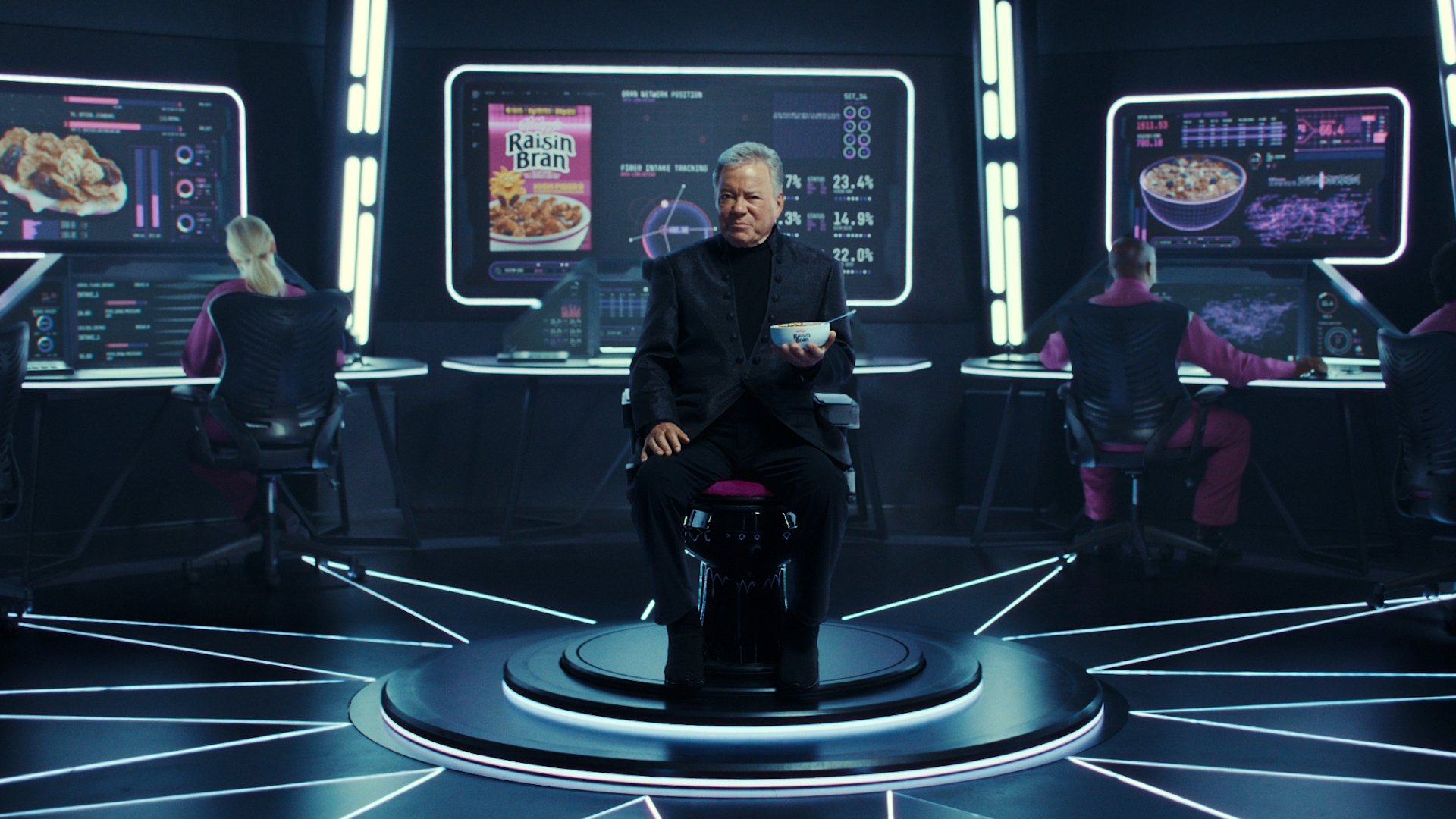
    Now here’s the caveat: a spot is only worth it if you have a really great piece of creative to showcase. It’s about bringing something memorable to the screen, leaving boredom at the door, and taking a risk. For us, we knew we wanted to bring humor into the mix, and that took the shape of Will Shat. Incorporating legendary actor William Shatner, we played into the punnyness of his name, and tied it into a fiber journey. 

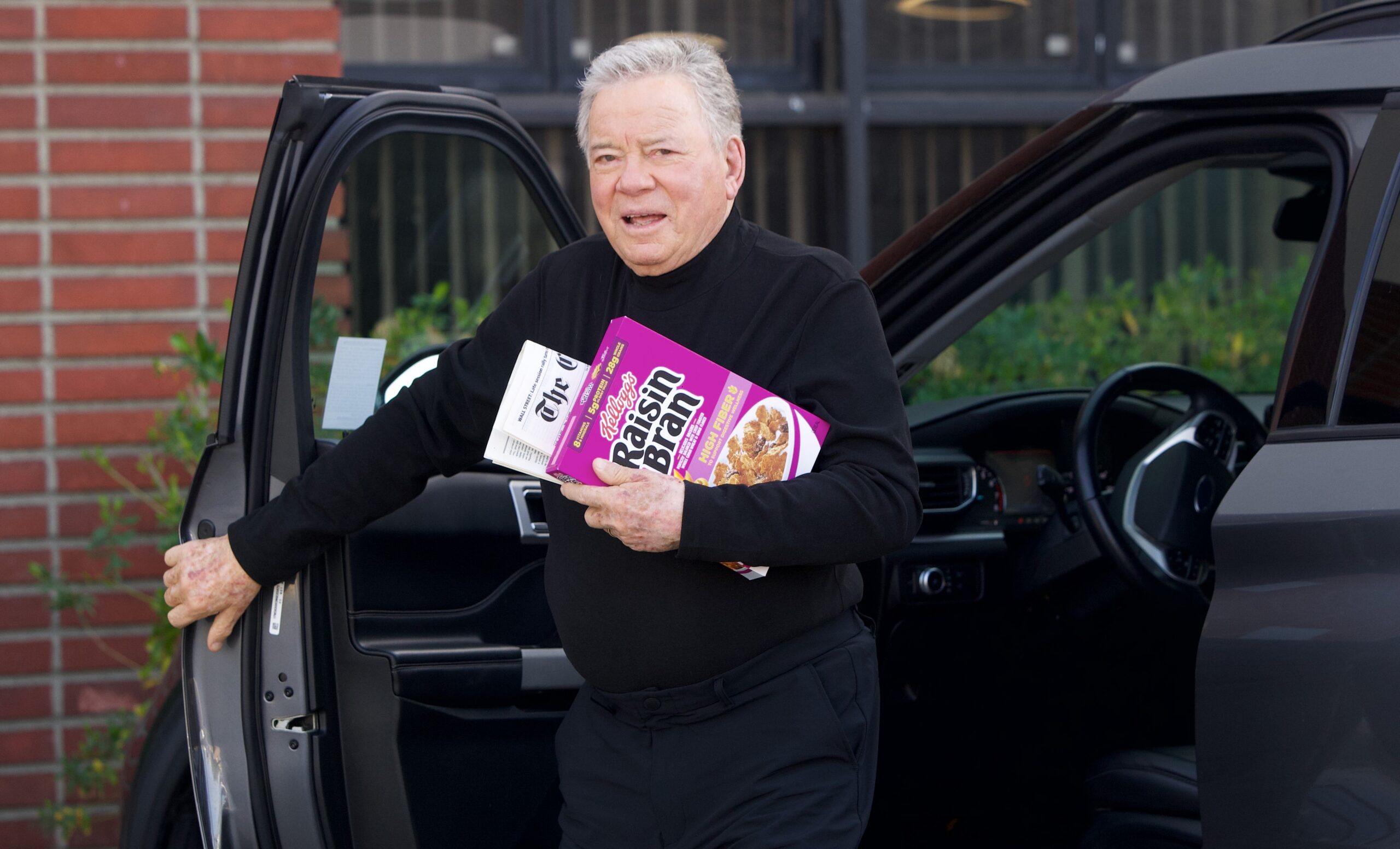
    Once we had a concept, it was about more than making and premiering a commercial. The buildup happened weeks beforehand, and required months of strategic planning and ideation. For example, you may have seen a certain pap shot of William Shatner 📸, chowing down on a bowl of Raisin Bran in his car. Coincidence? Definitely not. Our PR team coordinated the viral moment, and created an internet sensation weeks before anyone even knew about the Shatner/RB crossover. 

    We continued building pre-kickoff hype by releasing our commercial on the TODAY Show, days before its Sunday release. This gave audiences a sneak peek of the ad while producing online buzz. When the night finally came, we already had built momentum that was further emphasized by the game day hype. In total, through press hits and online coverage, Will Shat earned 18 BILLION impressions (yes you read that right! With a capital B!) 

    2. JCP’s True MVPS ❤️

    A successful campaign doesn’t need a primetime spot to make it big or have a major impact. JCPenney proves that. To become a part of the Big Game convo, JCPenney highlighted the true game day MVPs…the Moms! Bringing together Lisa Dawkins, Martha Thomas, and Culetta Beachum, the JCP team treated the moms to a glam session and shopping spree before their sons award ceremony. Not only was the concept true to the JCPenney brand, but it capitalized a major cultural moment by taking over social. 

    To pull it off, it was all about speed. While most brands spend months putting together a campaign, JCPenney filmed and produced their hero spot in just 36 hours. Then, they launched a series of social content just four days before kickoff. We helped capture on-the-ground BTS and social content that helped build hype, intrigue, and most importantly, engagement and conversation. 

    3. Ulta Beauty Everywhere 💄

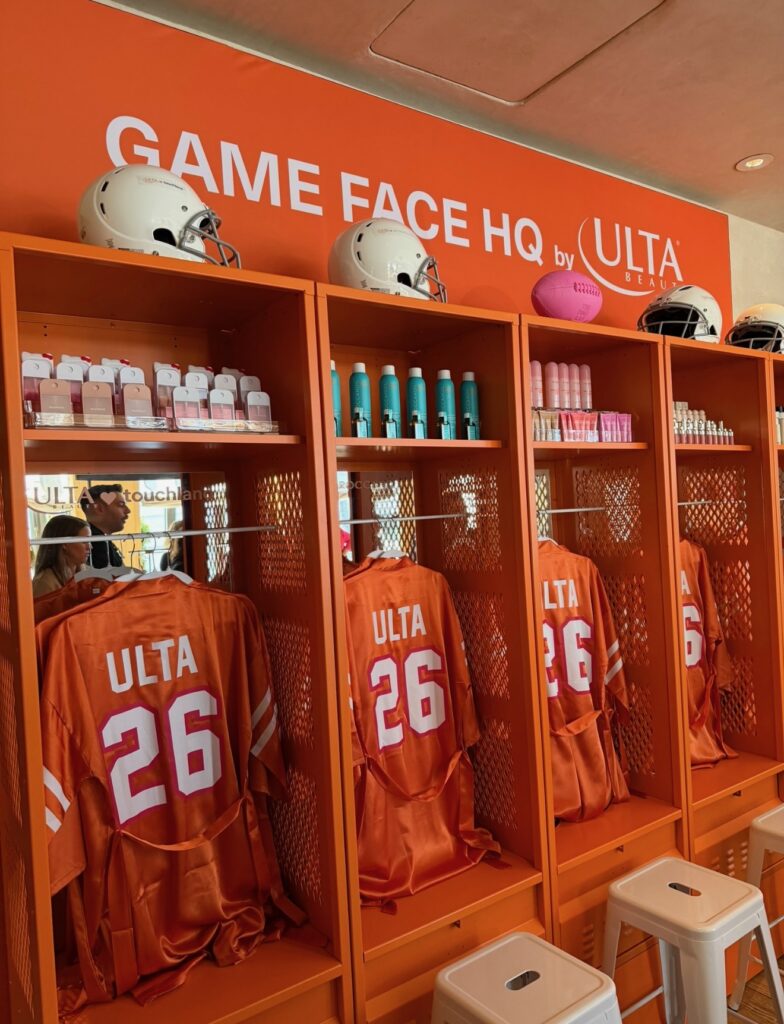
    Ulta Beauty showed us how a brand can be (fabulously) seen both on and off the field during the Big Game. Another campaign that set out weeks before the game (are we sensing a pattern here?), we developed a multi-touch point strategy, combining creator and talent partnerships, must-have merch, and real time social content.  

    We were also on the scene at their TikTok Clubhouse event, which invited talent and influencers to a glam-ified kickoff party. 

    It was all beauty, all the time, and it confirmed Ulta Beauty as the defining beauty voice of game day weekend.

    4. The Lumify x GCH Dream Team 👀📸

    Weeks before the Big Game, our friends at ChukMedia worked with Lumify to create a three tiered, high-volume social campaign. First, the team coordinated a series of paparazzi shots following football legend Devonta Smith in Lumify-purple suits. After stirring a bit of online intrigue, Lumify put the rumors to rest, revealing Devonta as their latest partner through a witty press conference ad. Following shortly afterwards, phase two consisted of Lumify introducing a second hero video, including WAG stars Anna Hall, Christen Goff, and Mya Danielle. To keep momentum going all the way until game day, the ChukMedia team created over 120+ pieces of social content to surround sound their campaign. 

    The idea culminated into one final, big moment during SB weekend. In collaboration with Gallery Club House, the brands teamed up to throw a special event, hosted by Chanen Johnson and Juwan Johnson. Bringing together over 300 athletes and influencers, Lumify and GCH threw the ultimate kickoff party slash wellness retreat. With plenty of eye drops at the ready, as well as a portrait studio and massage spa center, the collab served as a perfect example of how to keep gameday buzz alive, while creating additional social opportunities.

    Takeaways 🤔

    Five different brands, with Five very different approaches, but each found success by using the football season to their advantage. By implementing social throughout every step of the process, and creating campaigns that lasted before and after the game, we saw our clients define their spaces, and make noise during the biggest weekend of the year.  

    So…same time next year? 🏈📣


  • 32 Best Super Bowl Commercials of 2026—Watch Sabrina Carpenter, KATSEYE, and More

    32 Best Super Bowl Commercials of 2026—Watch Sabrina Carpenter, KATSEYE, and More

    In their definitive guide to the Best Super Bowl Commercials of 2026, Teen Vogue highlighted VaynerMedia’s campaign with Raisin Bran as a masterclass in how legacy brands can successfully pivot to capture the attention of a younger generation.

    The article specifically called out the “Will Shat” commercial for its use of punny humor. By leaning into William Shatner’s iconic persona and creating a play on words, Teen Vogue noted that VaynerMedia managed to make a functional health topic like fiber feel both relatable and meme-worthy.

    A key highlight for the editors was the campaign’s social-first rollout. Teen Vogue praised the stealth marketing tactics, specifically the staged paparazzi shots of Shatner eating cereal in traffic, as a genius way to get seen in the public eye.

    Read more about it on Teen Vogue.

  • Star power, humor and nostalgia: commercials score big at Super Bowl

    Star power, humor and nostalgia: commercials score big at Super Bowl

    In a recent segment, CNN analyzed the advertisements that defined the 2026 Big Game. The report highlighted a shift back to character-driven storytelling, specifically naming VaynerMedia’s work with Raisin Bran as a prime example of how to make a legacy brand culturally relevant again.

    CNN’s entertainment analysts noted that while many brands struggled to find the right tone, the “Will Shat” campaign successfully used humor to tackle the topic of digestive health. Part of what made the campaign so successful was the decision to leverage William Shatner’s sci-fi persona and lean into self-aware, pun-filled writing.

    The coverage emphasized that the campaign’s success began long before kickoff, referencing the viral “paparazzi” shots of Shatner eating cereal in his car, a strategic PR stunt developed by VaynerMedia. This CNN feature underscores our agency’s expertise in creating multi-layered campaigns that don’t just fill a 30-second TV slot but dominate the broader cultural conversation through star power, humor, and nostalgia.

    Read more about it on CNN.

  • The Best Nerdy SUPER BOWL Commercials of 2026

    The Best Nerdy SUPER BOWL Commercials of 2026

    VaynerMedia’s collaboration with Raisin Bran took center stage during Super Bowl LX, earning a top spot on Nerdist’s definitive list of the best “nerdy” commercials of 2026. The article celebrates the witty “Will Shat” concept, featuring the legendary William Shatner as a dedicated bran ambassador.

    Starring the Star Trek icon in a intergalactic spaceship, the spot shows Shatner delivering boxes of Raisin Bran to the masses with dramatic intensity, on a mission to provide fiber to the masses.

    By leaning into Shatner’s iconic persona and adding clever play-on-words, VaynerMedia successfully brought a legacy brand into the public eye, and became one of the most talked-about moments of the Big Game. This recognition from Nerdist underscores our ability to pair legendary talent with sharp creative to cut through the noise the year’s most competitive advertising landscape.

    Read more about it on Nerdist.

  • Ranking the best 2026 Super Bowl commercials: Good Will Dunkin, 50 Cent beef, ‘Will Shat’

    Ranking the best 2026 Super Bowl commercials: Good Will Dunkin, 50 Cent beef, ‘Will Shat’

    VaynerMedia’s creative impact was recently celebrated in The Athletic’s ranking of the best Super Bowl 2026 commercials, which spotlighted our viral “Will Shat” spot for Kellogg’s Raisin Bran. In a crowded field of game day spots, this campaign stood out for its daring humor.

    Critics lauded the commercial’s clever Will Shat wordplay and sci-fi parody, noting that it successfully made the conversation around digestive health mainstream yet funny. The campaign was particularly praised for its integrated rollout, which began weeks before the game with VaynerMedia-orchestrated staged paparazzi photos, showing Shatner eating cereal in L.A. traffic. This stealth-marketing strategy blurred the lines between celebrity gossip and brand storytelling, ensuring the ad was already trending before it even aired.

    For potential clients, this ranking validates VaynerMedia’s social-first approach. By leveraging the Super Bowl as a multi-screen ecosystem rather than just a 30-second TV slot, it proved that legacy brands can break through the noise. The success of the Raisin Bran debut, Kellogg’s first Big Game appearance in 15 years, serves as a powerful case study in driving massive earned media and ROI through disruptive, star-powered creativity.

    Read more about it on The Athletic.